Background
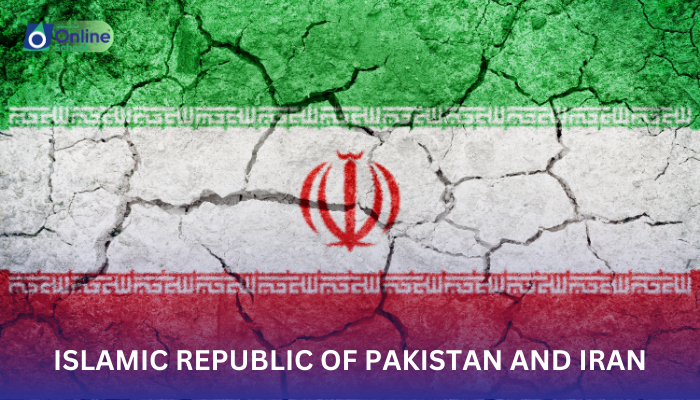
History of relations between Iran and the area which is now known as Pakistan dates back to times immemorial. Shortly after the advent of Islam, Muslim preachers and shocolars, who were to spread the light of Islam in the Sub-Continent travelled through Iran on their way to India; many Iranians who had embraced Islam starterd joining them in the later period. Islam became a strong bond of unity between the two regions in the days to come. Persian, originally an Iranian language, was used as official language as well as the language of scholarship and learning in the subcontinent.
- The Quaid-e-Azam said that Iran was on the top of the countries Pakistan would lookforward to, for friendship and cooperation.
Diplomatic and Political Ties
- Iran was the first country to recognize Pakistan after independence.
- In May 1949, Pakistan's first Prime Minister Liaquat Ali Khan paid an official visit to Iran. The visit was reciprocated by the Shah of Iran in March 1950.
- In 1955, Pakistan, Iran and Turkey joined the Baghdad Pact. After the exit of Iraq, shortly after, the Pact was re-organized as CENTO (Central Treaty Organization). The Pact was finally dissolved in 1979.
- In the year 1963, the Shahanshah of Iran used his good offices for the restoration of diplomatic relations between Pakistan and Afghanistan.
- Pakistan's diplomatic relations with Malaysia were severed in 1965, due to Malaysia's support of India in the Indo-Pakistan War; these were restored as a result of the Shah's diplomatic efforts.
- Pakistan, Iran and Turkey signed a new pact i.e. the RCD (Regional Cooperation for Development) on July 12, 1964. With this started a new era of friendship and cooperation between the three countries of the region.
- The RCD remained suspended for some years, after Iranian Revolution in 1979, and was revived in the year 1985, its scope was expanded and it was given a new name i.e. ECO (Economic Cooperation Organization).
Cultural Exchange
In the year 1965, Iran and Pakistan made a Cultural Pact. Under this Pact exchange of students, teachers, writers and artists took place. Each country established its cultural centers in the other country; this was done with a purpose to build cultural harmony.
Identity of Views
Pakistan and Iran adopted identical policy on international issues like Palestine, Eritrea, Afghanistan and Kashmir.
In 1951 Iran took an initiative to liberate its oil industry from the British control, the British retaliated by inflicting a blockade on Iran, Pakistan condemned the British action and upheld Iranian point of view.
During the 1965 and 1971 Indo-Pakistan Wars, Iran gave Pakistan full material and diplomatic support. On Kashmir issue Iran's support for Pakisan's stand point has always been consistent and unconditional.
Economic Cooperation
- In order to promote economic cooperation between the two countries, Pak- Iran Economic Commission was established in Feb, 1973.
- Under this Commission, Iran established textile, fertilizer, sugar, tyre and agriculture equipment factories in Pakistan, and also undertook the projects of expanding railways facilities. It was also decided that Iran will purchase part of commodities produced in these factories.
- After the fall of East Pakistan Iran helped Pakistan meet her foreign exchange deficits.
- Iran has been supplying Pakistan enormous quantities of Petroleum on discounted prices and has also provided financial aid for a variety of development projects in Pakistan.
- In 1976 Iran provided help for the rehabilitation of the people affected by earthquake in the northern areas of Pakistan. This gesture of goodwill was reciprocated by Pakistan when the Iranian province of Kirman was hit by earthquake in 1979.
- An oil refinery is being set up in Karachi with Iranian assistance.
Pakistan and the Iranian Revolution
Pakistanis were the paramount supporters of their Iranian brethren in their uprising against the oppressive and anti-Islamic policies of the Shah of Iran. This Revolution showed up in the early days of the last quarter of the 20th century. Pakistan immediately recognized the government that took over after the Shah was overthrown in Feb. 1979. Delegations of Pakistani intellectuals and Ulama paid several visits to Iran for expressing solidarity with the Iranian People.
After the Iranian Revolution, Pakistan supported Iranian government on the issue of fifty- two American citizens, Iranian government had taken hostage. Iran-Iraq War posed a great threat to the Iranian Revolution. Pakistan was a member of the "Muslim Ummah Peace Committee". The President of Pakistan made relentless efforts to make peace between Iran and Iraq.
for the Soviet philosophy of socialism. Under these circumstances it was natural that Pakistan opted to side with the Americans.
America had never supported Muslim League's stand on Pakistan issue during the days of our freedom movement. Inspite of that the Quaid-e-Azam called on the American ambassador in Delhi immediately after the Partition Plan was announced.
The Quaid-e-Azam received a message of felicitation from the American government even before the independence was formally proclaimed, but this was just a formality, because the first American ambassador to Pakistan was appointed years after that. Liaquat Ai Khan the first Prime Minister of Pakistan was the first top-ranking Pakistani leader to visit the US in 1950. He had received invitations from both America and the Soviet Union but the turned down the later and decided to visit the United States first; this decision went a long way in determining the direction of Pakistan's future foreign policy. On the other hand, Pakistan was not Washington's first priority. America's first priority was India. The US wanted to bring India in her sphere of influence, for the obvious reason that India was a much larger country than Pakistan was, and the Americans believed that Indian support would prove more helpful in forwarding America's policy of containing the Russians and the Chinese Socialists from expanding their sphere of influence. The Indian leadership, however, refused to become a Cold War ally of the United States.
The Indians made it clear that they wanted to remain neutral, but to meet their military requirements they established very close friendly relations with the USSR, and used her defeat at the hands of the People's Republic of China in 1962 as a pretext for extracting military aid from the US and other western countries.
In the year 1950, the US made it clear that she wanted to contain the USSR from expanding and to restrict her within her boundaries by deploying armed establishments outside Russian borders. For this purpose, the Americans needed the help of the countries bordering the Soviet Union. India declined to be a part of this anti-Russia coalition. In 1953 the American President Eisenhower announced that Pakistan, Iran and Turkey had consented to join Americans in an anti-Communist Pact.
In the year 1954, a Pact was concluded between Pakistan, Iran and Turkey, joining this pact virtually meant that Pakistan had become a part of the American block and American defense system. Pakistan's then foreign minister, Zafar Ullah Khan, who was responsible for this decision, was criticized even by the government circles in Pakistan. The government of Pakistan took four months to confirm Pakistan's membership to this pact (SEATO). Other, members of SEATO were, Philippines, Thailand, France, Australia, and New Zealand. Pronounced objective of this pact was to protect the South-Asian countries like Vietnam, Laos and Cambodia from the threat of Communist aggression. Americans made it clear that protecting Pakistan from Indian aggression did not fall within the preview of this Pact. Pakistan proposed the establishment of a standing army for the defense of the member countries, but this was turned down. Pakistan's request for more aid was also not acceded to. In her two wars against India, Pakistan did not receive any help from the Pact. Pakistan at last decided to quit SEATO, and she did it in 1972.
Pakistan felt greatly alarmed due to enormous amounts of American aid to India as a result of the Sino-Indian war of 1962. Pak-China friendship was for the first time made perceptible in 1962, Gen. Muhammad Ayub Khan (then President of Pakistan) paid visits to China and the Soviet Union, and the Americans did not like these overtures. Pakistan did not receive any help from the US in her wars against India in the years 1965 and 1971. Since Ayub Khan's foreign minister Zulfiqar Ali Bhutto was generally known as the sole architect of the foreign policy which resulted in the betterment of Pakistan's relation with China and Russia, it was natural that Pak-American relations were not so cordial during Bhutto period (1971-1977). In 1977 Bhutto accused the US of intriguing against him and of financing the opposition movement against his government. On this the Americans placed an embargo on their aid to Pakistan. The aid was not revived even when Zia-ul-Haq came to power in 1977. But in Dec. 1979 when Russians infiltrated in Afghanistan the situation took a dramatic turn and Pakistan assumed the position of the most important and the frontline state against the Russian aggressors. In 1980 Pakistan received $ 1.6 billion aid from the US and other $ 1.5 billion loan in addition to that. Pakistan was allowed to purchase, henceforth prohibited, sophisticated American armament including F16 aircrafts. In 1986 Americans signed another $ 4.2 billion military and economic aid pact with Pakistan. After the defeat of the Soviet Union in the year 1989 Pakistan lost importance in the American eyes. The groups of fighters that had succeeded in driving the Soviets out of Afghanistan, of course with the help of Pakistan and America, started quarrelling among themselves. Taking advantage of this situation a new group Taliban emerged on the Afghan political horizon. Their progress was very rapid and they soon captured governmental power in Afghanistan. Successive Pakistan governments supported Taliban. On Sept. 11, 2001 American Trade centre and other strategic positions were attacked by unidentified terrorists. Americans accused Taliban and Alqaidah for maneuvering these attacks. Americans decided to launch an all-out attack on international terrorism and invited Pakistan to join the "international coalition" against terrorism. Since Pakistan herself had suffered a lot at the hands of terrorists in the past, she was readily inclined to join the anti-terrorist coalition and committed to provide logistic support to the American led allied forces attacking Afghanistan.
